Fix the response first
Automatic WhatsApp acknowledgement, itinerary templates ready, someone answering in the evening. Before increasing spend.
Travel & Tourism · Delhi NCR & remote
Travel is the most competitive sector I work in. The same Kashmir week is sold by a hundred agencies at similar prices, and the customer contacts four of them in one evening.
Short answer
Digital marketing for travel agencies covers the whole chain from destination search to booking. Three things make it different from other sectors: demand is violently seasonal, the booking window is days rather than weeks, and the customer is simultaneously talking to several operators — so response speed frequently matters more than price.
Four details. A real reply the same day, from me.
01 The premise
The first is seasonality, and it is brutal. Demand for a destination appears, peaks and collapses on a calendar that barely moves year to year. An operator advertising evenly across twelve months is spending most of the budget when nobody is planning. Content has to exist and rank months before the window, and paid spend has to concentrate inside it.
The second is that the enquiry is never exclusive. The same family messaged three competitors in the same ten minutes. Whoever sends a usable itinerary and a real price first is in a conversation; the others are arguing against something already read. That makes your response system a bigger commercial lever than your ad creative.
The third is that the product is nearly identical across suppliers. Everybody has the same hotels, the same transport and roughly the same margins. What differs is the person handling it — whether they know the destination, whether they answer at 9pm, whether they solve a problem at the hotel desk. Marketing that leads with itineraries competes on price; marketing that leads with the person does not.
02 Seasonality
Indicative planning windows. Confirm against your own booking data before setting budgets.
| Season | When the planning actually happens |
|---|---|
| Summer hills — Kashmir, Himachal, Uttarakhand | Enquiries build from around February and peak March to May. Advertise before school holidays are fixed, not during them. |
| Monsoon and short breaks | Shorter, more impulsive windows, closer to travel. Weekend-led and less predictable. |
| Festive and Diwali travel | Planned weeks ahead, family-driven, with dates settled early. Book-ahead behaviour is strong. |
| Winter — Rajasthan, Goa, Kerala, South | Peak enquiry from around October, running through the winter season. |
| Religious and pilgrimage | Fixed calendars and registration dates. The most predictable window of all, and the easiest to plan for. |
| International | Longer lead times and visa timelines. Planning starts months before travel. |
03 From the accounts
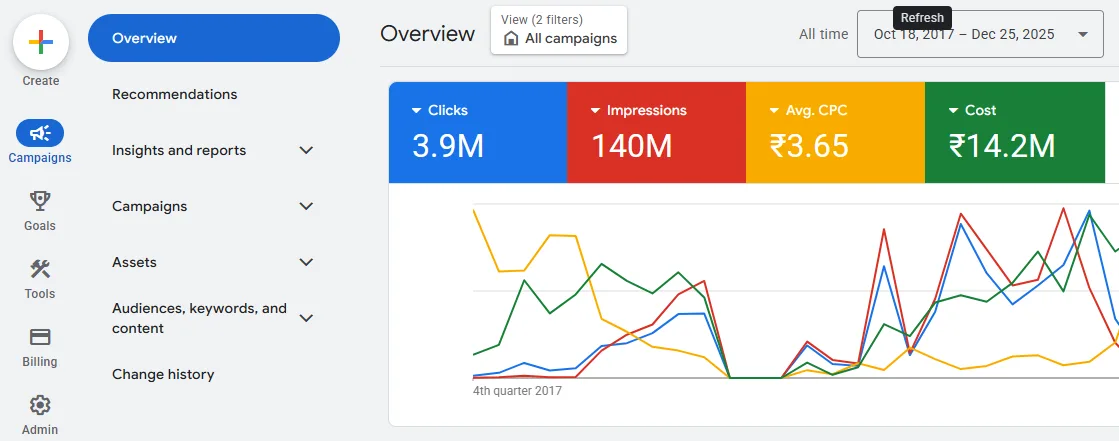
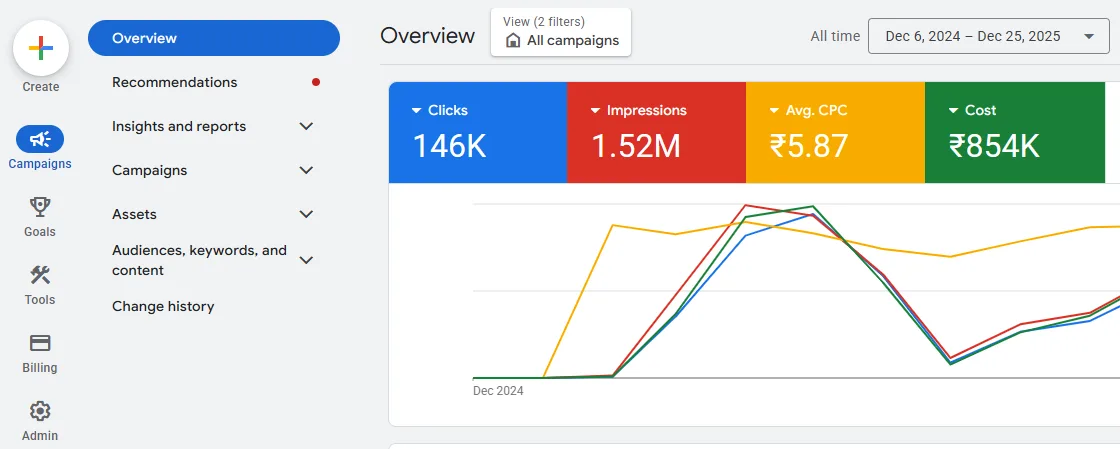
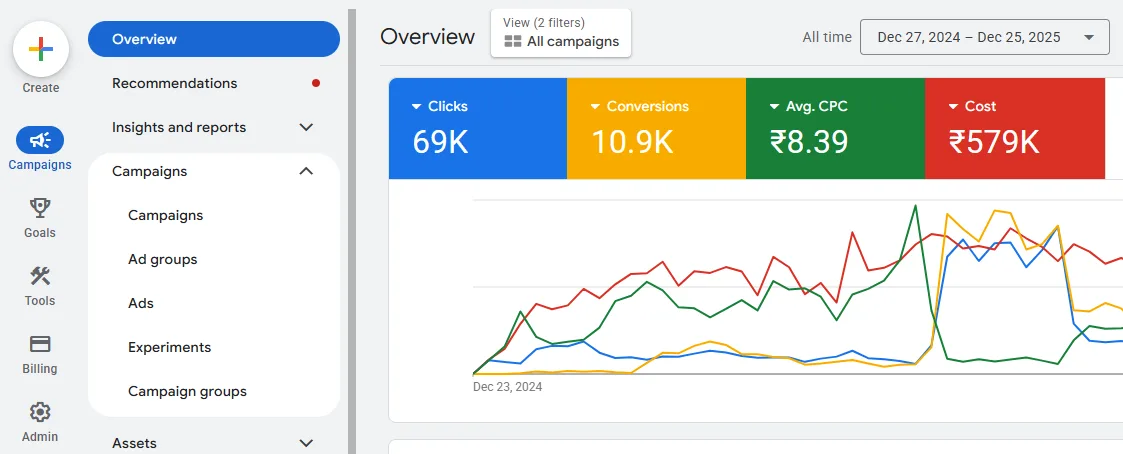
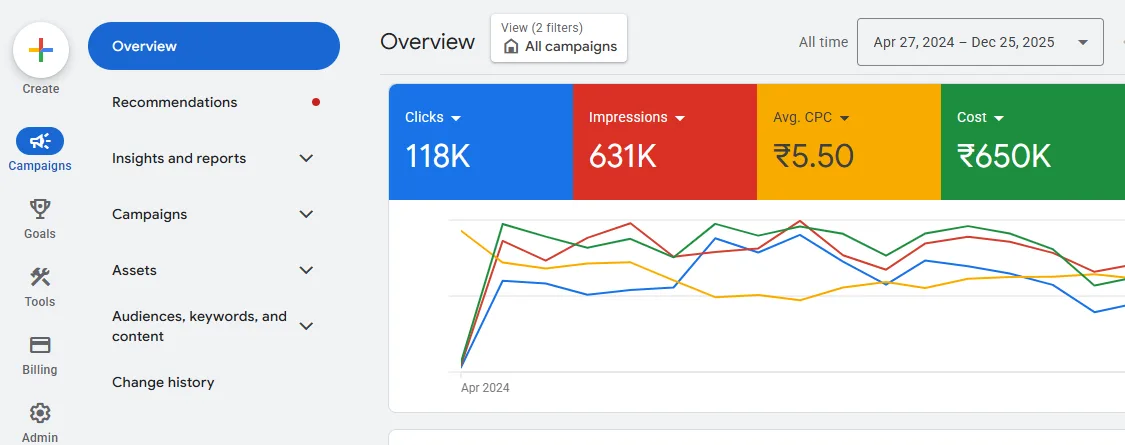
Tour operators and travel agencies are the sector I have worked in longest. These are the account overviews, each linking to its case study — the numbers are whatever the account says over the date range shown on it.
Free travel review
Time it on your next three enquiries. In travel that single number predicts your conversion better than pricing does, and fixing it usually costs less than a month of ads.
Four details, and a real reply today.
04 Process
The order matters: the response system before the advertising, or the advertising funds somebody else’s booking.
Automatic WhatsApp acknowledgement, itinerary templates ready, someone answering in the evening. Before increasing spend.
One page per destination, not one packages page. People search for the place, and a combined page ranks for none of them.
Content live and indexed two to three months before demand appears, so it ranks when planning starts.
Budget inside the planning window rather than spread evenly. This alone changes the economics of a small budget.
Contact them before the same window next year. The cheapest booking in the business, and almost nobody does it.
05 Requirements
Each omission costs enquiries in a market where the customer has three other tabs open.
— Travel & Tourism
These sit next to travel agency marketing and are usually bought with it. Same person doing the work in each case.
— Questions
Straight answers, including the ones that cost me work. If yours is not here, ask it — I reply the same day.
Almost always speed. Travellers contact several operators at once, and the first usable itinerary with a real price wins a disproportionate share. If yours goes out the next morning, you are competing against something already read and considered.
Before the planning window, not during the travel window. For summer hill destinations that means starting well before holidays are fixed; for winter destinations, from early autumn. Advertising while people are travelling reaches them a year too late.
Yes, or at least a clear per-person range with inclusions. Travel buyers compare across many operators openly, and a package without a price is skipped rather than enquired about. A stated range also filters out enquiries that were never going to book.
Not on price or breadth. On the things they cannot do: a real person who knows the destination, a genuinely customised itinerary, and somebody reachable when something goes wrong at 11pm. Those are the reasons people still book with operators.
Both, in different roles. SEO on destination pages compounds across seasons and costs nothing per enquiry once ranked. Paid advertising is how you reach the planning window this year while the SEO builds. Most operators need both.
Not for the same destinations in the same season. If I am running campaigns for one operator selling Kashmir packages, I will not take another. I will tell you if a conflict exists before we start rather than after.
Free consultation · No obligation
Tell me your destinations, your season and how quickly an itinerary currently goes out. You will get a seasonal plan and a response system aimed at replying in minutes.
Name, number, email, what you need.